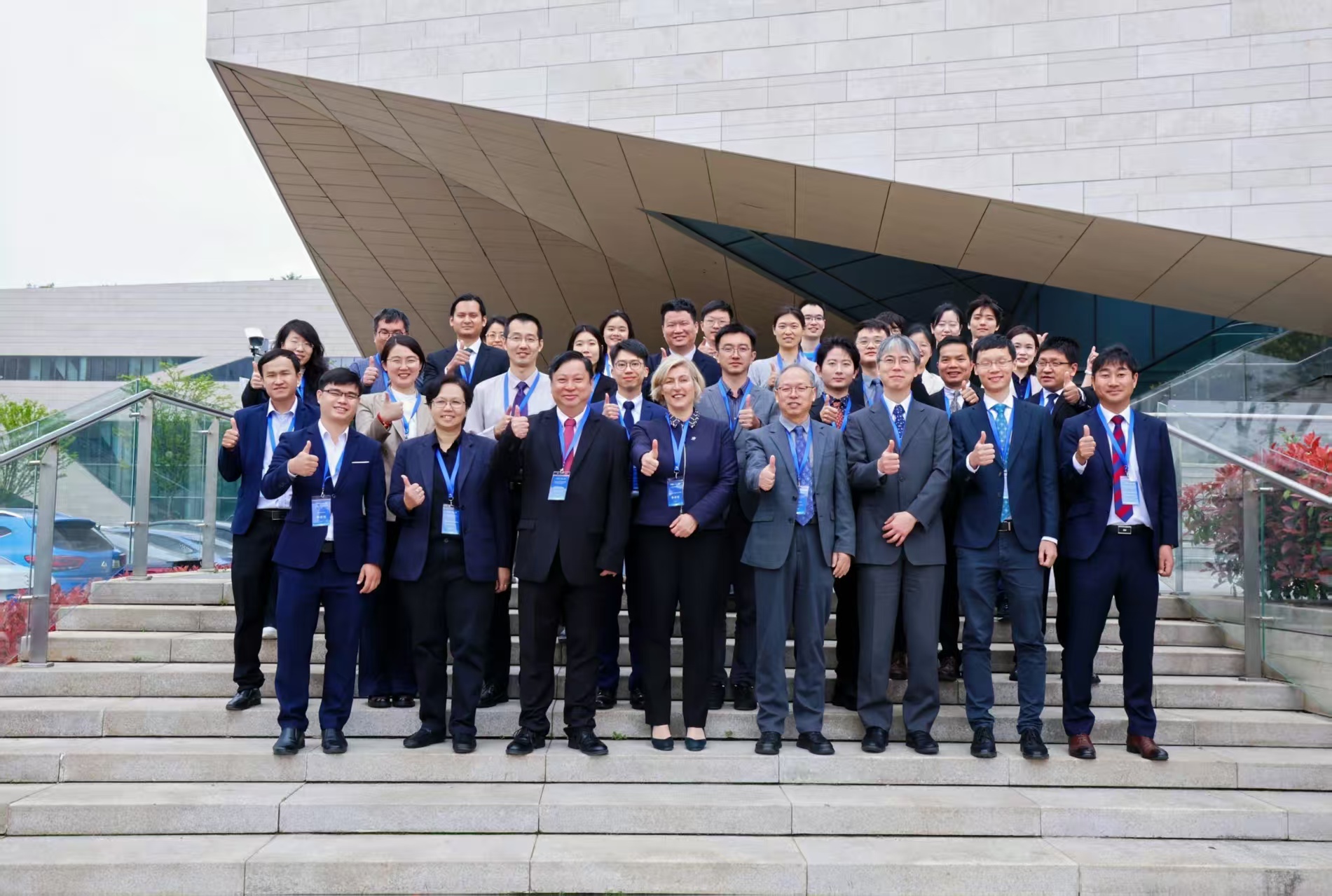

Workshop on AI Applications in Tropical Cyclone Analysis and Prediction Held in Shanghai, China
From April 21 to 23, 2026, the
ESCAP/WMO Typhoon Committee convened the “Workshop on AI Applications in
Tropical Cyclone Analysis and Prediction cum Meeting of Expert Team on AI
Applications in Tropical Cyclone Analysis and Forecasting” in Lingang, Shanghai, focusing on the application of artificial
intelligence in typhoon analysis and forecasting. Hosted by the Asia-Pacific
Typhoon Collaborative Research
Center (AP-TCRC), the event gathered over 70 participants, including experts from WMO, Cambodia; China; Hong Kong, China; Japan;
Lao PDR; Macao, China; Malaysia, Philippines; Republic of Korea; Thailand and
Viet Nam, as well as leading AI research teams in the world and top universities in China.
The workshop highlighted the
transformative potential of AI in meteorology, showcasing cutting-edge AI
weather models such as DeepMind, AIFS, and several prominent Chinese models
like Fengwu and Fuxi. Participants
emphasized that amid global warming and the increasing frequency of extreme
weather events, traditional forecasting methods are facing significant
bottlenecks. Consequently, the deep integration of AI is viewed as a historic
opportunity to achieve a leap forward in precision forecasting and early warning
capabilities.
Throughout the workshop, experts
engaged in thematic discussions covering a wide array of advanced applications,
including AI-driven typhoon track and intensity prediction, satellite remote
sensing, wind and precipitation analysis, and storm surge forecasting. The
agenda also included strategic planning for 2026 and beyond, focusing on
crucial collaborative topics like joint model evaluations, data exchange
policies, and research on tropical disturbances.
Ultimately, the workshop
reinforced a strong regional consensus to transition AI technologies from
laboratories to frontline disaster prevention operations. The collaborative effort aims to support the United Nations'
"Early Warnings for All" initiative, establishing a new paradigm for
global disaster risk reduction and advancing international meteorological
governance.